ISSLS Prize in Clinical Science 2026: Data-driven classification of lumbar spine degeneration trajectories in chronic low back pain
Abstract
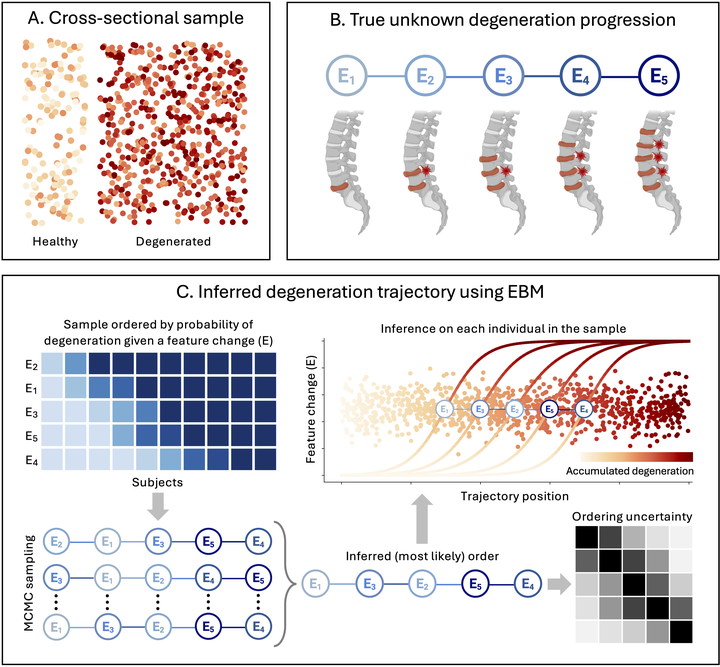
Background: The temporal sequence of lumbar spine degeneration (trajectory) is difficult to characterize due to limited availability of longitudinal imaging data. The aim of this cross-sectional study was to discover degeneration trajectories and their clinical relevance by applying an innovative computational approach to an extensive dataset from chronic low back pain patients. Methods: Clinical MRI exams from 423 patients in the comeBACK study were graded for disc degeneration, facet osteoarthritis, and other pathoanatomical features. We then trained an event-based model, which is specifically designed to infer longitudinal trajectories from cross-sectional data to model spine degeneration trajectory subtypes. The clinical significance of the identified trajectories was assessed using propensity score matching of trajectory subtypes and subsequent generalized linear mixed-effects modeling. Pain characteristics included the Fear-Avoidance Beliefs Questionnaire, neuropathic pain (painDETECT), pain impact score, and chronic widespread pain (CWP). Results: Two distinct trajectories were identified. A “disc-first” subtype (n=260, 61%) was characterized by a high prevalence of disc herniation and disc degeneration that was more severe than facet osteoarthritis. Conversely, a “facet-first” subtype (n=146, 39%) was characterized by a greater severity of facet osteoarthritis than disc degeneration. The disc-first subtype was associated with more CWP (p = 0.030), while the facet-first subtype had higher neuropathic pain (painDETECT scores) (p = 0.039). Conclusion: We identified two distinct trajectories of lumbar spine degeneration related to differing clinical presentations. After replication with other large datasets, this method could be used to characterize and stage spinal degeneration of individual patients. Ultimately, this new information would help clarify degeneration mechanisms and risk factors and support treatment optimization.